Published: July 2026
Category: Bitcoin • Markets • Economics
One of Bitcoin’s most remarkable features is not its price, its volatility, or even the technology that powers it. It is its predictability.
Unlike traditional currencies, whose supply can expand through monetary policy decisions, Bitcoin follows a fixed issuance schedule that has remained unchanged since the network launched in January 2009. Every ten minutes, new bitcoins are created as rewards for miners who secure the blockchain. Every four years, that reward is reduced by half through a programmed event known as the halving.
This simple but powerful mechanism has brought Bitcoin to a historic milestone. More than 19.8 million bitcoins have now been mined, meaning over 94% of the maximum 21 million supply is already in circulation. Fewer than 1.2 million coins remain to be created, and they will be released gradually over the next century before the final bitcoin is expected to be mined around the year 2140.
The approach toward Bitcoin’s supply limit is changing the economics of the network, influencing miners, investors, institutions, and policymakers alike.
Designed to Be Scarce
Bitcoin’s creator, Satoshi Nakamoto, designed the protocol to mimic the scarcity of precious metals rather than the unlimited issuance possible with fiat currencies.
The maximum supply of 21 million BTC is enforced by every node running the Bitcoin software. No central bank, government, corporation, or developer can create additional coins without convincing the overwhelming majority of the network to adopt new rules—a scenario widely viewed as extremely unlikely because it would undermine Bitcoin’s core value proposition.
Scarcity has become one of Bitcoin’s defining characteristics.
As more coins enter long-term storage and fewer new bitcoins are created each day, the available supply for trading naturally becomes more limited.
Issuance Continues to Slow
Bitcoin’s issuance schedule is one of the most transparent monetary systems ever created.
The block reward has changed as follows:
- 2009–2012: 50 BTC per block
- 2012–2016: 25 BTC
- 2016–2020: 12.5 BTC
- 2020–2024: 6.25 BTC
- 2024–2028: 3.125 BTC
With approximately 144 blocks mined each day, the network now issues only about 450 new bitcoins daily, compared with 7,200 bitcoins every day during Bitcoin’s first four years.
This represents a reduction of more than 93% in daily new supply since launch.
Every future halving will continue reducing issuance until block subsidies eventually become negligible.
Lost Bitcoin Makes Supply Even Smaller
Not every bitcoin that has been mined remains accessible.
Over the past seventeen years, countless wallets have been permanently lost due to forgotten passwords, discarded hard drives, damaged storage devices, or owners passing away without sharing private keys.
Blockchain research firms estimate that between 3 million and 4 million bitcoins may already be permanently inaccessible.
If these estimates are broadly accurate, the effective circulating supply is considerably smaller than official issuance figures suggest.
This means Bitcoin’s practical scarcity may be greater than many investors realize.
Institutions Continue Accumulating
Institutional participation has accelerated significantly over recent years.
Asset managers, publicly traded companies, pension funds, hedge funds, and regulated investment products collectively control hundreds of thousands of bitcoins.
The launch of spot Bitcoin exchange-traded funds (ETFs) has further increased institutional access by allowing investors to gain exposure without directly managing private keys.
As institutional ownership expands while new supply continues declining, competition for available bitcoin may intensify.
Miners Face a New Economic Reality
Bitcoin miners are directly affected by declining issuance.
Every halving immediately reduces block rewards by fifty percent, forcing operators to improve efficiency if they wish to remain competitive.
Modern mining companies increasingly invest in:
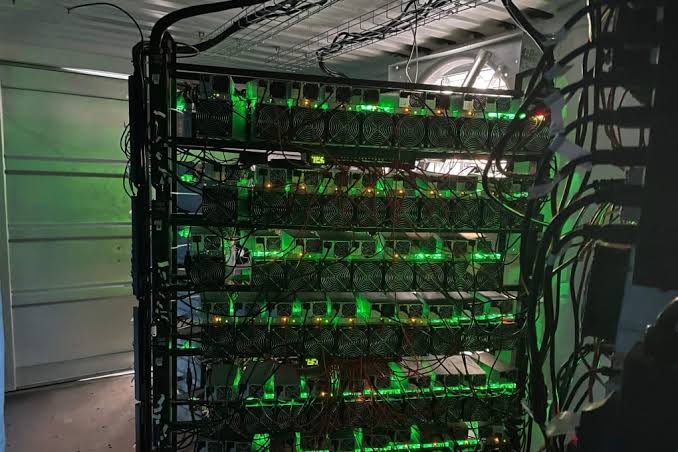
- Next-generation ASIC miners
- Immersion cooling systems
- Renewable energy
- Artificial intelligence monitoring
- High-efficiency power infrastructure
- Automated maintenance
- Smart firmware optimization
Profitability increasingly depends on reducing operational costs rather than simply deploying additional hardware.
This shift has transformed mining into one of the world’s most advanced computing industries.
Transaction Fees Become More Important
As block rewards continue decreasing, transaction fees are expected to represent an increasingly important source of miner revenue.
Every Bitcoin transaction may include a fee paid by users seeking confirmation from miners.
Periods of high network demand often produce higher fees, increasing miner income beyond block subsidies alone.
Over the coming decades, Bitcoin’s long-term security model will rely on a combination of transaction fees and remaining block rewards.
Researchers continue studying how this transition will evolve as issuance approaches zero.
Global Demand Continues Expanding
Bitcoin adoption is no longer limited to technology enthusiasts.
Today, participants include:
- Retail investors
- Banks
- Governments
- Public corporations
- Payment providers
- Asset managers
- Universities
- Non-profit organizations
- Fintech companies
- Developers
At the same time, infrastructure supporting Bitcoin continues expanding through new exchanges, custody providers, payment networks, mining facilities, educational programs, and blockchain research initiatives.
The network itself has become increasingly resilient despite changing market conditions.
Scarcity Alone Does Not Determine Price
Although limited supply remains important, Bitcoin’s market value ultimately depends on demand.
Macroeconomic conditions, investor sentiment, regulation, technological development, institutional participation, and global liquidity all influence market prices.
Scarcity creates the foundation, but adoption determines how that scarcity is valued.
This distinction explains why Bitcoin experiences periods of both rapid appreciation and significant corrections despite its fixed supply.
Looking Toward the Final Bitcoin
The final bitcoin is not expected to be mined until approximately 2140, more than a century after the Genesis Block.
Long before then, block rewards will have become extremely small, and the network will rely increasingly on transaction fees to incentivize miners.
By that time, Bitcoin may support a vastly different financial ecosystem than exists today.
Digital payments, tokenized assets, decentralized identity systems, artificial intelligence, and programmable financial infrastructure may all coexist alongside the world’s first decentralized monetary network.
Final Thoughts
As Bitcoin approaches the 20 million coin milestone, the conversation is shifting from creation to scarcity.
More than ninety-four percent of the total supply has already entered circulation, leaving fewer new coins available with each passing year. Combined with growing institutional participation, continued infrastructure investment, and expanding global awareness, this milestone represents more than a numerical achievement—it marks another stage in Bitcoin’s gradual maturation as a global digital asset.
For Bitmore, understanding Bitcoin means looking beyond daily market movements. The protocol’s transparent monetary policy, predictable issuance schedule, and resilient infrastructure continue to make it one of the most fascinating technological and financial innovations of the modern era. As the remaining supply steadily declines, Bitcoin’s next chapter will be defined not by how many coins can still be created, but by how the world chooses to use them.