
Published: July 2026
Category: Blockchain • Regulation • Bitcoin • Industry Analysis
For more than fifteen years, cryptocurrency has challenged traditional finance, introducing a decentralized alternative where transactions are secured through cryptography instead of centralized institutions. From Bitcoin’s launch in 2009 to today’s global ecosystem of digital assets, blockchain technology has transformed discussions around money, ownership, identity, and trust.
Yet despite remarkable innovation, one obstacle has consistently slowed broader adoption—regulatory uncertainty.
Across the world, governments, financial institutions, technology companies, and investors have struggled to answer fundamental questions. When does a cryptocurrency become a security? Which regulator should oversee digital assets? How should exchanges, stablecoins, decentralized finance (DeFi), and blockchain service providers operate within existing legal systems?
These questions have influenced billions of dollars in investment decisions and shaped the pace of blockchain innovation worldwide.
Today, that landscape may be entering a new chapter.
Recent developments surrounding the United States’ proposed CLARITY Act have reignited conversations across the digital asset industry. Lawmakers continue refining legislation designed to establish clearer rules for cryptocurrencies, blockchain businesses, exchanges, and developers, with supporters arguing that regulatory certainty could encourage innovation while strengthening consumer protections.
Why Regulation Matters
Technology often evolves faster than legislation.
The internet, cloud computing, artificial intelligence, and now blockchain have all experienced periods where innovation significantly outpaced legal frameworks.
Cryptocurrency presents an even greater challenge because it combines finance, software engineering, cryptography, cybersecurity, and global digital commerce into a single ecosystem.
Without clear regulations, businesses face uncertainty regarding licensing, taxation, compliance obligations, investment structures, and consumer protection requirements.
Institutional investors, pension funds, banks, and publicly listed companies often require regulatory certainty before committing significant capital. As a result, the absence of well-defined rules has delayed many large-scale blockchain initiatives.
Clear legislation does not guarantee success, but it reduces uncertainty—allowing businesses to innovate with greater confidence while providing consumers with stronger safeguards.
The CLARITY Act Explained
The proposed CLARITY Act aims to establish a more consistent regulatory framework for digital assets within the United States.
While details continue to evolve through legislative negotiations, the bill generally seeks to clarify regulatory responsibilities, define how different categories of digital assets should be treated, and provide more predictable oversight for market participants. Recent revisions have also focused on anti-money-laundering (AML), know-your-customer (KYC), ethics, and enforcement provisions.
Supporters believe that such clarity could:
- Encourage institutional investment.
- Reduce legal uncertainty for blockchain companies.
- Strengthen consumer confidence.
- Improve compliance standards.
- Support responsible innovation.
- Increase transparency across digital asset markets.
Critics, meanwhile, argue that lawmakers must carefully balance innovation with investor protection, ensuring that regulation does not unintentionally slow technological progress.
A New Era for Institutional Adoption
Institutional participation has become one of the defining trends within the cryptocurrency industry.
Major financial organizations increasingly view digital assets as part of the broader financial ecosystem rather than a niche technological experiment.
Banks are expanding digital asset services, asset managers continue exploring tokenized financial products, payment companies are integrating blockchain settlement technologies, and enterprise software providers are investigating decentralized infrastructure.
However, institutional investors typically require predictable legal environments before deploying large amounts of capital.
Should comprehensive regulation emerge, analysts expect several developments:
- Greater institutional participation.
- Expanded blockchain infrastructure investment.
- Increased venture capital activity.
- Growth in enterprise blockchain applications.
- Improved banking relationships for compliant crypto businesses.
- More standardized operational practices.
These developments would not only influence cryptocurrency prices but also strengthen the underlying infrastructure supporting decentralized technologies.
Bitcoin Mining Continues to Evolve
Regulation represents only one aspect of blockchain’s ongoing evolution.
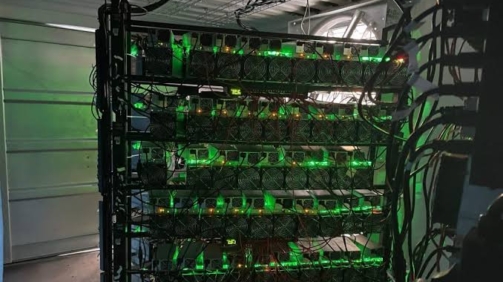
Bitcoin mining itself continues advancing through improvements in hardware efficiency, firmware optimization, renewable energy integration, and intelligent infrastructure management.
Today’s mining facilities bear little resemblance to the early mining operations of Bitcoin’s first decade.
Modern mining environments increasingly rely upon:
- High-efficiency ASIC systems.
- Intelligent power distribution.
- AI-assisted monitoring.
- Predictive maintenance.
- Liquid and immersion cooling.
- Renewable energy partnerships.
- Remote infrastructure management.
- Industrial-grade networking.
As mining technology matures, operational excellence increasingly depends upon engineering, data analytics, and infrastructure optimization rather than computational power alone.
Artificial Intelligence Meets Blockchain
Artificial Intelligence has become one of the fastest-growing technologies influencing blockchain infrastructure.
Rather than replacing human operators, AI enhances operational decision-making through predictive analytics and automated monitoring.
Mining operations increasingly explore AI-driven solutions capable of:
- Detecting hardware anomalies before failures occur.
- Optimizing cooling performance.
- Forecasting maintenance schedules.
- Monitoring environmental conditions.
- Balancing computational workloads.
- Improving energy efficiency.
- Identifying unusual network behavior.
The integration of AI into blockchain infrastructure represents a broader shift toward intelligent, self-optimizing digital ecosystems.
Energy Remains Central to Innovation
Few topics generate as much discussion within cryptocurrency as energy consumption.
The industry continues investing heavily in efficiency improvements through next-generation semiconductor technology, renewable energy partnerships, advanced cooling systems, and more intelligent infrastructure management.
Rather than simply reducing electricity usage, modern engineering focuses on maximizing computational output per unit of energy consumed.
This shift encourages sustainable growth while improving operational economics.
Global Competition Is Accelerating
The race to become a global blockchain leader extends far beyond cryptocurrency exchanges.
Countries increasingly compete to attract blockchain startups, fintech companies, digital asset service providers, cloud infrastructure firms, and artificial intelligence research organizations.
Nations that establish balanced regulatory frameworks may attract greater investment, higher-skilled employment, and increased technological innovation.
Conversely, prolonged uncertainty risks encouraging businesses to relocate toward jurisdictions offering clearer operational guidance.
What This Means for the Industry
Whether the CLARITY Act ultimately becomes law in its current form or undergoes further revisions, one trend is unmistakable: cryptocurrency is steadily transitioning from an experimental technology into an increasingly regulated and institutionalized financial ecosystem.
The future of blockchain will likely be shaped by the interaction of several transformative forces:
- Clearer regulatory frameworks.
- Artificial intelligence.
- High-performance computing.
- Advanced cybersecurity.
- Renewable energy innovation.
- Enterprise software.
- Cloud-native infrastructure.
- Decentralized finance.
- Tokenized real-world assets.
- Global digital payments.
Each of these technologies reinforces the others, creating opportunities that extend well beyond cryptocurrency speculation.
The Road Ahead
The blockchain industry has never stood still.
From Bitcoin’s earliest blocks to today’s sophisticated decentralized applications, every stage of development has introduced new technical challenges and new opportunities.
As governments refine regulatory frameworks and businesses continue investing in infrastructure, blockchain technology is becoming an increasingly permanent component of the global digital economy.
For technology companies, investors, developers, and enterprises, success will increasingly depend on understanding not only cryptocurrencies themselves, but also the infrastructure, engineering, cybersecurity, artificial intelligence, and regulatory environments that support them.
The coming years may be remembered not simply for higher market valuations or new digital assets, but for the maturation of blockchain into a trusted foundation for financial systems, enterprise computing, and digital innovation worldwide.
At Bitmore, we believe the future belongs to organizations that combine research, engineering excellence, and responsible innovation. As blockchain technology continues to evolve, we remain committed to following the developments that shape tomorrow’s decentralized digital infrastructure.