
Published: July 2025
Category: Bitcoin Mining • Infrastructure • Global Markets
Bitcoin mining has become one of the most competitive technology industries in the world. What began as a hobby for programmers using home computers has evolved into a global network of industrial-scale operations powered by advanced semiconductor chips, dedicated power infrastructure, artificial intelligence, and sophisticated data centers.
The competition is no longer simply about owning the most mining machines. Today’s leaders are competing across multiple fronts—energy efficiency, infrastructure design, operational uptime, cooling technology, automation, and access to reliable electricity. The race to produce the most computational power at the lowest possible cost is reshaping both the cryptocurrency industry and the broader landscape of high-performance computing.
Hashrate: Bitcoin’s Security Engine
Every second, Bitcoin miners perform an enormous number of cryptographic calculations known as hashes. These calculations are used to validate transactions and secure the blockchain against attacks.
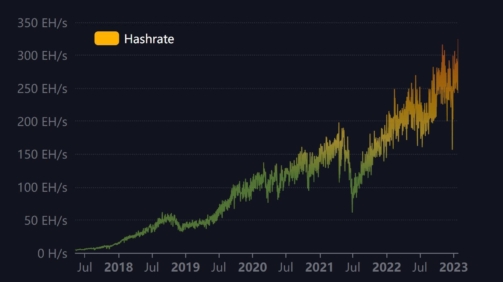
The combined computational power of all miners is measured as the network hashrate. It is one of the most important indicators of Bitcoin’s health because it reflects the total amount of computing power protecting the network.
In Bitcoin’s early years, hashrate was measured in megahashes and gigahashes per second. As technology advanced, the network moved through terahashes, petahashes, exahashes, and now into the zettahash era, representing one of the largest decentralized computing systems ever created. Network hashrate has repeatedly reached new all-time highs, demonstrating continued investment in mining infrastructure despite changing market conditions.
Billions Invested in Mining Infrastructure
Over the past decade, Bitcoin mining has attracted billions of dollars in infrastructure investment.
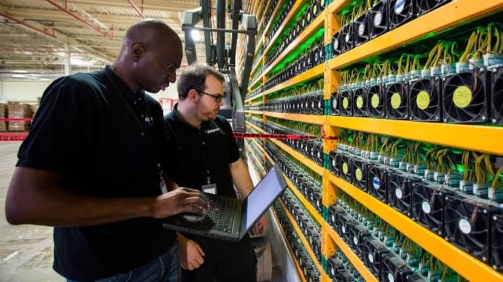
Modern facilities often resemble enterprise data centers rather than traditional industrial buildings. They include high-capacity electrical substations, fiber-optic networking, intelligent monitoring systems, automated cooling technologies, and thousands of ASIC mining devices operating continuously.
A single industrial mining site may consume tens or even hundreds of megawatts of electricity while housing tens of thousands of specialized machines. Building such facilities requires expertise in electrical engineering, networking, construction, thermal management, and cybersecurity.
The rapid expansion of mining infrastructure has also created demand for engineers, electricians, software developers, data analysts, and energy specialists, making Bitcoin mining an increasingly multidisciplinary industry.
The Search for Affordable Energy
Electricity represents the largest operating expense for most mining businesses.
Because profit margins can change quickly with Bitcoin prices and mining difficulty, operators constantly seek locations with reliable and competitively priced power.
Mining companies increasingly partner with:
- Hydroelectric power stations
- Wind farms
- Solar energy projects
- Natural gas recovery sites
- Geothermal facilities
- Grid-balancing initiatives
Some operators also deploy mobile mining containers that can be relocated to areas with surplus energy, allowing unused electricity to be converted into computational work instead of being wasted.
This flexibility has positioned Bitcoin mining as a potential consumer of stranded or underutilized energy resources.
ASIC Innovation Continues
Application-Specific Integrated Circuits, better known as ASIC miners, remain the backbone of Bitcoin mining.
Every new generation of ASIC hardware focuses on one primary objective: producing more hashes while consuming less electricity.
Manufacturers continue improving:
- Semiconductor fabrication processes
- Chip architecture
- Power efficiency
- Cooling compatibility
- Firmware optimization
- Reliability under continuous workloads
Even small gains in efficiency can have a significant financial impact when deployed across thousands of machines operating around the clock.
As competition intensifies, older hardware gradually becomes less economical, encouraging operators to modernize their fleets with more efficient systems.
Cooling Has Become a Strategic Advantage
Heat is one of the greatest challenges facing modern mining operations.
ASIC miners generate substantial amounts of heat, and maintaining stable operating temperatures is essential for maximizing performance and extending hardware lifespan.
Traditional air cooling remains common, but many operators are now investing in advanced thermal management solutions.
These include:
- Liquid cooling
- Immersion cooling
- Smart airflow management
- Automated ventilation systems
- Heat recovery technologies
Immersion cooling, in particular, has attracted attention because it allows mining hardware to operate at lower temperatures while reducing dust accumulation and mechanical wear.
As mining equipment becomes increasingly powerful, thermal engineering is becoming as important as computational performance.
Artificial Intelligence Is Changing Operations
Mining facilities now generate enormous volumes of operational data.
Artificial Intelligence is helping operators transform that data into actionable insights.
AI systems can analyze information from thousands of sensors to identify patterns that humans might miss.
Applications include:
- Predictive maintenance
- Cooling optimization
- Power consumption analysis
- Equipment failure prediction
- Environmental monitoring
- Performance forecasting
- Automated infrastructure alerts
Rather than replacing engineers, AI enhances decision-making by allowing operators to respond to potential issues before they lead to downtime.
Governments Are Paying Attention
As Bitcoin mining has grown, governments have become increasingly interested in its economic and energy implications.
Some jurisdictions actively encourage mining investment by offering access to renewable energy and supportive regulatory frameworks.
Others have introduced stricter requirements related to electricity usage, environmental reporting, taxation, or licensing.
This has created a dynamic global landscape where mining companies evaluate not only energy prices but also political stability, infrastructure quality, internet connectivity, and regulatory certainty before expanding into new regions.
Beyond Mining: Building Digital Infrastructure
The technologies developed for Bitcoin mining increasingly influence other industries.
High-density computing, advanced cooling systems, intelligent power management, and AI-driven monitoring are now finding applications in cloud computing, artificial intelligence training, scientific research, and enterprise data centers.
The expertise gained through operating large-scale mining facilities contributes to broader advancements in digital infrastructure.
As demand for computing power continues to grow, innovations originally developed for blockchain networks may help shape the next generation of high-performance computing.
Looking Ahead
The global hashrate race shows no signs of slowing down.
With every improvement in semiconductor technology, cooling systems, networking, and artificial intelligence, Bitcoin mining becomes more sophisticated and more efficient.
Future mining facilities are expected to rely even more heavily on automation, renewable energy integration, predictive analytics, and intelligent infrastructure management.
While Bitcoin’s market price often dominates headlines, the real story lies beneath the surface—in the engineers designing more efficient systems, the operators optimizing every watt of electricity, and the global infrastructure securing one of the world’s largest decentralized financial networks.
At Bitmore, we believe the future of Bitcoin mining will be defined not simply by computational power, but by innovation, efficiency, sustainability, and engineering excellence. As the industry continues to evolve, understanding the technologies behind the hashrate race will remain essential for anyone following the future of blockchain infrastructure.